
Shopify as Your Omnichannel Hub: How to Sell Everywhere Without Losing Control
Learn how Shopify can act as your omnichannel “source of truth”—syncing inventory, customer data, and reporting across social selling, marketplaces, and POS—plus a practical growth framework.

Selling on one channel used to be enough. Today, customers discover products on social, compare options on marketplaces, and still expect to buy online or in person with the same level of convenience. For merchants, that creates a new reality: growth often means adding channels.
But there’s a hidden cost: every new channel increases operational complexity. Inventory gets fragmented, reporting becomes inconsistent, and customer data gets scattered across platforms. If you’ve ever oversold a product, struggled to reconcile stock, or felt unsure where your revenue is truly coming from, you’ve already experienced the downside of “selling everywhere.”
The solution isn’t selling on fewer channels. The solution is running every channel through a single source of truth. That’s where Shopify stands out—as an omnichannel hub that helps you sell across social, marketplaces, and in person without losing control of inventory, customers, or reporting.

Why Selling Everywhere Creates Operational Chaos
Most brands add channels for a good reason: that’s where customers are. But channel expansion can quietly break the business if your operations aren’t designed to handle it.
1) Your catalog becomes fragmented
On your website, you might have full product education and bundles. On marketplaces, listings are simplified. On social, products appear as shoppable links. Each channel ends up with a different version of your catalog—and the more versions you maintain, the more likely something becomes outdated.
2) Overselling and inventory mismatch become normal
Nothing damages trust like “Sorry, it’s out of stock” after checkout. Inventory mismatch happens when each channel is treated as a separate store. The result:
- overselling during traffic spikes
- stock showing “available” where it’s actually gone
- manual reconciliation that wastes time and creates mistakes
3) Customer data lives in silos
One customer might buy in-store, discover you on social, and purchase again through a marketplace. If those purchases don’t connect, you can’t build a real customer relationship. That makes retention harder because you don’t have a unified view of who the buyer is or what they’ve purchased before.
4) Reporting becomes unreliable
When revenue is split across dashboards, decision-making becomes guesswork:
- Which channel is profitable after fees and fulfillment costs?
- Which products actually drive long-term value?
- Which channel creates repeat buyers versus one-time orders?
In short: selling everywhere can create growth and chaos. To scale, you need a central system that keeps everything consistent.
Shopify as the Central Source of Truth
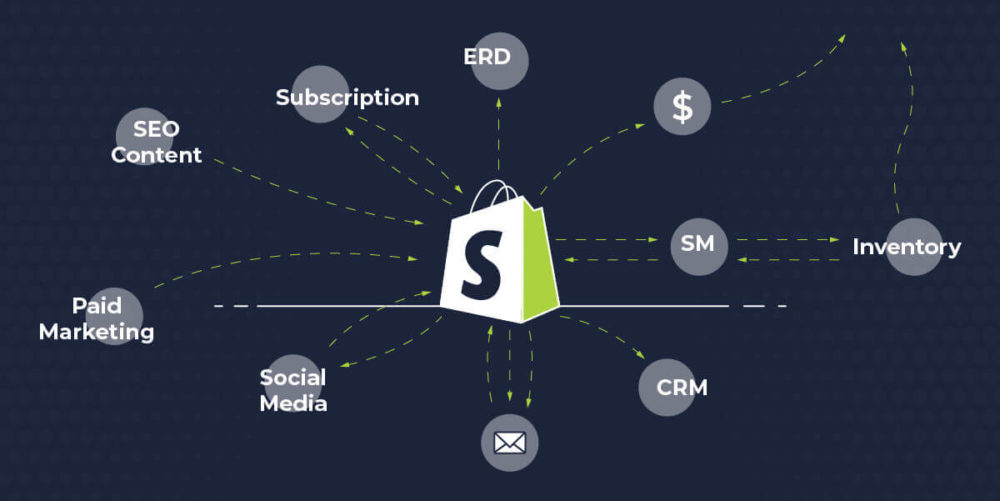
Think of Shopify as the “operating system” of your commerce business. Channels come and go. Algorithms shift. But your foundation should remain stable: one inventory system, one customer database, one reporting layer.
This is what Shopify does best when used as your omnichannel hub:
Real-time inventory sync (so you stop guessing)
When inventory updates in one place, it should reflect everywhere. That reduces overselling, prevents stock confusion, and keeps customer expectations aligned.
Real-time inventory discipline also improves your team’s workflow: customer support can answer “is it in stock?” confidently, and fulfillment teams spend less time fixing mistakes.
Unified customer profiles (so retention becomes easier)
A customer who buys once is not the finish line. It’s the beginning of your relationship. When customer profiles are unified, you can:
- recognize returning buyers across channels
- segment customers by purchase behavior
- build post-purchase experiences that drive repeat orders
Omnichannel isn’t only about acquisition. It’s about retaining customers once you’ve earned them.
Centralized reporting (so you can optimize with clarity)
If you can’t measure correctly, you can’t improve correctly. Centralized reporting helps you see the business as one system rather than fragmented sales streams.
That’s how you answer the questions that actually matter:
- Which channel brings high-intent customers?
- Where does profit come from, not just revenue?
- Which products drive repeat purchases?
With Shopify as the source of truth, channels become distribution methods—not separate businesses.
How Shopify Connects Social, Marketplace & POS
Omnichannel doesn’t mean “be everywhere” blindly. It means connecting the channels that match your audience while keeping operations unified. Here’s how Shopify fits into the three major channel groups: social, marketplaces, and in-person selling.
Social commerce: sell where discovery happens
Social platforms are often the first touchpoint. People see a creator mention your product, watch a short clip, and tap a link. If the transition from discovery to purchase is smooth, conversion happens.
Shopify’s advantage is that your product catalog can be connected to social selling workflows so the shopping experience remains consistent: pricing, product details, and availability stay aligned.
Marketplaces: use them for demand capture, not dependency
Marketplaces can be powerful acquisition engines because they already have traffic. But they can also create dependency because customers belong to the marketplace, not to you.
The healthiest strategy is to treat marketplaces as a top-of-funnel channel while keeping Shopify as your owned foundation. When your inventory and product data are centralized, you reduce the operational headache of maintaining separate systems per marketplace.
Examples of marketplace ecosystems merchants often explore include eBay and Walmart. The exact mix depends on niche and region—but the principle stays consistent: centralize your catalog and inventory so you don’t multiply chaos.
In-person selling: POS as an extension of ecommerce, not a separate tool
Retail stores, pop-ups, and events are not separate businesses. They’re another customer touchpoint. When POS connects to the same inventory and customer system, you avoid:
- selling stock that’s already gone online
- losing customer history from in-person purchases
- running inconsistent promotions
This is what “sell online and in person” should mean: one business, multiple touchpoints.

Omnichannel Growth Framework
If you want to scale omnichannel without losing control, you need a strategy that respects both growth and operations. Here’s a practical framework that works for most Shopify merchants.
1) Own your store (your highest-leverage asset)
Your Shopify store is where you control brand experience, conversion flow, customer data, and retention. This is your long-term growth engine. Even if other channels drive traffic, your store is where you can build:
- trust through product education
- higher AOV through bundles and recommendations
- repeat purchases through post-purchase systems
In omnichannel strategy, your store is the foundation—not an afterthought.
2) Use marketplaces for acquisition (but don’t let them own you)
Marketplaces work best when you use them to capture demand you didn’t create. They can introduce your brand to new buyers, validate products, and generate cash flow.
The key is operational discipline: keep your product data and inventory centralized so marketplace growth doesn’t become a manual nightmare.
3) Retain customers through email/SMS lifecycle marketing
Acquisition is expensive. Retention is profitable. Once someone buys, the goal is to bring them back—without needing to pay again for attention.
Retention systems that pair well with omnichannel growth:
- welcome and onboarding flows
- post-purchase education and reorder prompts
- VIP segmentation and early access
- win-back campaigns for inactive buyers
Omnichannel stores win when they convert first-time customers into repeat buyers—regardless of where the first purchase happened.
4) Optimize your channel mix (based on profit, not ego)
Many brands keep adding channels because it “feels like growth.” Real growth is profitable. Your channel mix should be decided by:
- customer acquisition cost and fees
- operational burden per channel
- repeat purchase behavior by channel
- inventory complexity and fulfillment speed
Sometimes the best omnichannel strategy is not “more channels.” It’s fewer channels, run better—with Shopify as the stable core.
Common Omnichannel Mistakes (And How to Avoid Them)
Mistake 1: Treating each channel like a separate store
This creates duplicated work, inconsistent pricing, and inventory mismatch. Fix: keep Shopify as the source of truth and connect channels to it.
Mistake 2: Expanding channels before operations are stable
Channel expansion magnifies problems. If fulfillment and support are shaky in one channel, they’ll break in three channels. Fix: stabilize inventory, shipping, and support before scaling distribution.
Mistake 3: Ignoring retention after acquisition
Many brands focus only on “getting the sale” and forget the lifecycle. Fix: build post-purchase flows and customer segmentation early.
Mistake 4: Measuring only revenue, not profit
Some channels look good in revenue but cost more in fees, refunds, and support. Fix: evaluate channels based on contribution margin and repeat purchase impact.
Final Thoughts
Omnichannel is the future because customers shop across touchpoints. But omnichannel growth only works if your business has a central source of truth—inventory, customer profiles, and reporting all aligned in one system.
Shopify is powerful as an omnichannel hub because it helps you sell across channels without turning your operations into chaos. When your store is the foundation, marketplaces become acquisition channels, social becomes discovery, and POS becomes a connected extension—not separate worlds.
Making good sales on Shopify becomes far more sustainable when you treat Shopify as your central commerce system—syncing inventory in real time, unifying customer data, and optimizing your channel mix—then compounding growth through store design improvements, SEO, email/SMS automation, social proof, and global expansion without losing control.


