Why Geolocation Is the Foundation of Ecommerce Personalization
Why geolocation is the foundation of ecommerce personalization and how IP-based language and currency switching reduces friction for global shoppers.

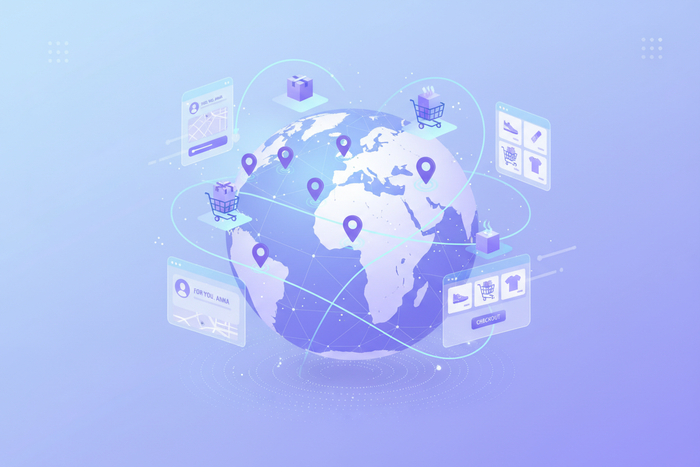
Personalization in ecommerce does not start with products. It starts with knowing where a shopper is coming from. If a store gets the location, language, or currency wrong, friction shows up before the shopper even evaluates the product. That early mismatch can quietly reduce trust and increase bounce.
This article explains why geolocation is the first layer of personalization and how IP-based language and currency switching helps Shopify stores convert global traffic more smoothly.
 What Shoppers Expect When Visiting Global Stores
Modern ecommerce shoppers are used to seamless digital experiences.
When someone visits a global store, they subconsciously expect the site to adapt to them. This expectation is shaped by large platforms that already localize experiences automatically.
From the first page view, shoppers look for:
- A familiar language they can scan quickly
- Prices displayed in their local currency
- Clear signals that the store understands their region
When these expectations are met, shoppers stay longer and explore. When they are not, hesitation begins before any product evaluation happens.
Why Location-Aware Experiences Matter
Location is the most reliable personalization signal available at entry.
Unlike browsing history or behavioral data, location is immediately detectable and highly predictive. It informs language preferences, currency expectations, and even purchasing confidence.
A location-aware experience reduces the mental effort required to interpret content. Shoppers do not need to translate prices, guess shipping implications, or question whether the store serves their country.
This reduction in cognitive load directly impacts conversion rates, especially for first-time visitors who have no prior relationship with the brand.
Language and Currency as the First Personalization Layer
Language and currency are not cosmetic details.
They form the first personalization layer that determines whether a shopper feels comfortable continuing the journey.
When language and currency match a shopper’s location:
- Product information is easier to understand
- Price perception feels transparent and fair
- Checkout friction is significantly reduced
When they do not match, even strong products struggle to convert. Shoppers may still browse, but confidence erodes with every unfamiliar detail.
This is why localization should happen before any advanced personalization logic is applied.
The Role of IP Geolocation in Reducing Friction
IP geolocation enables stores to personalize experiences automatically.
By detecting a visitor’s location through their IP address, ecommerce stores can adapt language and currency instantly, without asking the shopper to make manual selections.
This matters because friction at entry is expensive.
- Manual language selectors rely on user effort
- Popups interrupt browsing flow when overused
- Incorrect defaults increase bounce rates
IP-based localization removes these barriers quietly. Shoppers land on a store that already feels familiar, allowing them to focus on products rather than configuration.
Why Entry-Point Localization Beats Late-Stage Fixes
Many stores attempt to localize late in the funnel.
They add currency conversion at checkout or clarify shipping regions only after the cart is opened. By that point, trust has already been tested.
Entry-point localization works differently.
By aligning language and currency from the first page view, stores set expectations early. This consistency carries through product pages, cart, and checkout, creating a cohesive experience.
Shoppers who feel understood at entry are more likely to complete purchases without second-guessing.
How Shopify Stores Implement Location-Based Localization
For Shopify merchants, implementing geolocation-based personalization does not need to be complex.
The goal is not to overwhelm shoppers with options, but to provide sensible defaults based on their location while allowing manual control when needed.
This is where tools like CVC – Multi Currency Converter fit naturally into the workflow.

CVC allows Shopify stores to automatically switch language and currency based on customer location using IP geolocation. Instead of forcing shoppers to configure settings, the store adapts in the background.
The result is a localized experience that feels intentional rather than engineered.
Geolocation as a Foundation, Not a Feature
Geolocation should not be treated as an add-on.
It is the foundation that enables meaningful personalization later in the funnel. Without it, recommendations, promotions, and messaging operate on unstable ground.
By aligning language and currency early, stores create an environment where advanced personalization can actually perform.
This is especially important for brands scaling internationally, where traffic diversity increases faster than operational capacity.
Conclusion
Ecommerce personalization does not start with personalization engines.
It starts with recognizing where a shopper is and adapting the experience accordingly. Language and currency mismatches remain one of the biggest sources of friction in global ecommerce.
By using IP geolocation to localize stores at the entry point, Shopify merchants create experiences that feel intuitive, trustworthy, and conversion-ready from the first interaction.
FAQ
Is IP geolocation accurate enough for ecommerce?
IP geolocation is reliable for country and region-level detection, which is sufficient for language and currency localization.
Should shoppers still be able to change language or currency manually?
Yes. Automatic defaults improve entry experience, while manual controls respect user preference.
Does geolocation affect site speed?
When implemented efficiently, geolocation runs in the background and does not impact page load performance.
Is geolocation useful for smaller Shopify stores?
Yes. Even small stores benefit from reducing friction for international visitors and improving first impressions.
Read More
