How Language Barriers Quietly Kill Ecommerce Conversions
How language barriers quietly kill ecommerce conversions and how AI-powered translation helps Shopify stores turn global traffic into revenue.

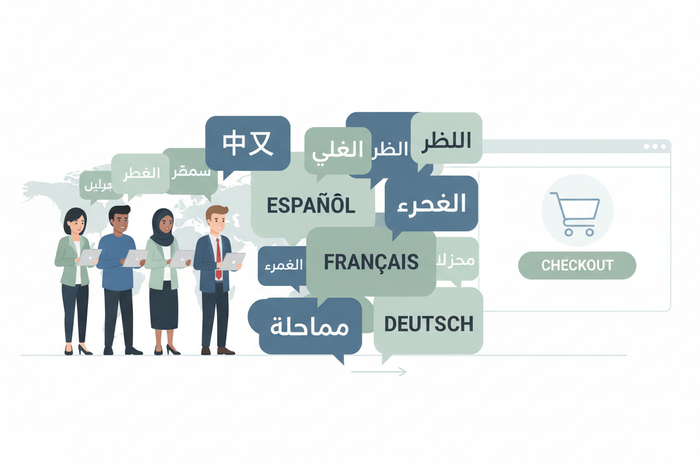
When shoppers cannot fully understand product details, policies, or checkout instructions, hesitation increases and conversions drop. This article explores how language impacts ecommerce performance and why AI-powered translation is becoming essential for Shopify stores selling internationally.
Why Language Is a Hidden Conversion Barrier
Language affects every stage of the buying journey. From product discovery to checkout, comprehension plays a direct role in whether a shopper feels confident enough to proceed.

Studies consistently show that customers prefer shopping in their native language. Even when shoppers understand English, they are far more likely to trust and purchase from stores that communicate clearly in familiar terms.
When language barriers exist, shoppers experience:
- Uncertainty about product features or sizing
- Doubts about shipping, returns, or warranty policies
- Reduced trust in payment and checkout steps
These micro-frictions accumulate, leading to abandoned product pages and carts.
Translation vs Localization: Understanding the Difference
Translation and localization are often used interchangeably, but they are not the same.
Translation focuses on converting text from one language to another. Localization goes further by adapting content to local expectations, tone, and context.
In ecommerce, effective localization includes:
- Clear, natural product descriptions in the shopper’s language
- Consistent terminology across product pages, cart, and checkout
- Localized UI elements that feel native, not forced
Without proper translation as a foundation, localization cannot succeed. This is why accurate, scalable language translation is a prerequisite for global growth.
How Language Builds Trust in Ecommerce
Trust is the primary driver of conversion for first-time buyers.
When shoppers land on a product page written in their own language, they instinctively feel more secure. Clear communication reduces perceived risk and shortens the decision-making process.
Language clarity contributes to trust by:
- Reducing misunderstanding around product usage or specifications
- Making policies feel transparent rather than hidden
- Creating a sense of professionalism and legitimacy
In contrast, mixed-language pages or partial translations signal low attention to detail, which can quietly undermine confidence.
The Scalability Problem of Manual Translation
Many Shopify merchants start with manual translation when expanding internationally. While this works at a small scale, it quickly becomes unsustainable.
Common challenges include:
- High cost of professional translation for large catalogs
- Inconsistent updates when products or policies change
- Untranslated content from third-party apps or dynamic sections
As stores grow, manual workflows slow expansion and introduce errors. This creates fragmented experiences that hurt conversion rather than improve it.
AI Translation as a Conversion Tool
AI-powered translation changes how ecommerce stores approach language.
Instead of treating translation as a one-time project, AI allows merchants to maintain multilingual storefronts dynamically. Content updates automatically as products, collections, and pages change.

For international shoppers, this means:
- Consistent language across the entire shopping journey
- Immediate access to new products and promotions
- Reduced friction during decision-making
For merchants, it removes the operational burden of managing multiple languages manually.
How Shopify Stores Use AI Translation in Practice
Successful Shopify stores use AI translation strategically, not aggressively.
Instead of overwhelming users with language switches, they focus on delivering clarity where it matters most:
- Product titles, descriptions, and specifications
- Cart and checkout instructions
- Shipping, returns, and payment information
When language clarity is applied to high-intent moments, conversion rates improve naturally without relying on discounts or promotions.
Using AI Language Translation Without Complex Setup
This is where tools like CVC – Multi Currency Converter quietly fit into the workflow.
Instead of manually translating each page, merchants can use AI Language Translate to automatically convert storefront content into multiple languages in seconds. This allows stores to respond instantly to international traffic without disrupting existing operations.

The result is not a “translated store,” but a store that feels accessible to global shoppers from the first interaction.
Why Language Optimization Beats Price Cuts
Discounts attract attention, but clarity converts.
When shoppers fully understand what they are buying, why it fits their needs, and how the process works, they are more willing to pay fair prices.
Language optimization improves:
- Perceived product value
- Confidence during checkout
- Long-term customer trust
This makes it one of the highest-ROI conversion improvements available to international ecommerce brands.
Conclusion
Language is not a cosmetic detail in ecommerce. It is a core conversion factor.
As international traffic grows, stores that remove language barriers early gain a structural advantage. AI-powered translation allows Shopify merchants to scale globally without operational complexity.
When shoppers understand your store, they trust it. And when trust exists, conversions follow.
FAQ
Does AI translation hurt SEO?
When implemented properly, AI translation helps expand search visibility by allowing content to be indexed in multiple languages, supporting international SEO.
Is AI translation accurate enough for ecommerce?
Modern AI translation handles product descriptions, UI text, and policies effectively, especially when consistency across pages is more important than literary nuance.
Should every page be translated?
High-intent pages such as product pages, cart, and checkout should be prioritized. Supporting pages can follow as traffic grows.
Can translation be updated automatically?
Yes. AI-based systems allow translations to stay in sync with content updates, preventing outdated or mismatched language.
Read More
- Shopify iOS App Integration: The Fastest & Easiest Way To Do in 2025
- Top 10 Online Shopping Apps in Qatar 2025
- Top 10+ Online Shopping Apps in the USA 2025
- What Is Mobile-First Strategy and How Can Shopify Brands Adapt?

